
Showing posts with label LionFiction. Show all posts

Monday, February 13, 2017

Deep Water By Christine Poulson

ISBN13: 9781782642145
My thoughts: The world of pharmaceutical cures for disease is populated with brilliant people driven to successfully create Nobel Prize winning cures yet amid their world of glass beakers is the conscience shattering lure of the prize. We find that these driven people are still individuals with the hopes, loves, and desires of ordinary men and women.

In a story that takes the reader into the meticulous research lab and the daily detailed work of trial and error that is involved in research, the author shows the loving family side of characters. Little Chloe with her genetic code that requires daily treatments just to stay alive is a charmer that Katie can't help but fall in love with. Chloe's parents are successful in their own professional endeavors - Rachel a wood working artist and David a patent lawyer. But as David's past pushes open the door to involvement in a case in which his recently deceased ex-wife was lead counsel, a complication of emotions inserts itself into his life and that of his second wife, Rachel.

The moral and ethical issues as well as the criminal activities of life and death show the potential that big pharmacy could potentially drown themselves in as they pursue the high goal of  being first to develop a cure. A prize of recognition but mostly a prize of the mighty financial lure.

Breadcrumbs of evidence are sprinkled throughout but only the most astute can actually predict the ending in this whodunit.

About the book: An obesity treatment has been discovered, but before anyone can benefit, a dispute breaks out about who owns the discovery. David Marchmont, a patent lawyer, is asked to handle the case. There's one big problem, though: crucial evidence is missing--evidence that might have a bearing on the clinical trial two years before.

David's personal life has its own challenges. His daughter, Chloe, has a rare and serious genetic condition. His wife, Rachel, becomes friendly with a young researcher, Kate Flanagan, who is seeking a cure for Chloe's disorder; Kate, in turn, becomes concerned that her lab colleagues may be cutting corners on the obesity drug.

As evidence of mishandling mounts--then disappears--Kate, Rachel, and David find themselves caught up in acute ethical challenges and personal danger. Is biotechnology outstripping our capacity to make ethical decisions?

DISCLOSURE: I was provided a complimentary copy by Kregel Publishing on behalf of Lion Hudson to facilitate a review. Opinions are my own. I was not compensated.

Monday, December 12, 2016

Lucifer's Harvest The Chronicles of Hugh de Singleton, Surgeon (Book 9) by Mel Starr


9781782641889 | $14.99
Paperback | Lion Fiction
About the book: King Charles of France has announced that he is confiscating Aquitaine, and Prince Edward has sent for knights and men-at-arms from England to assist him in opposing the French king. Lord Gilbert Talbot is required to provide five knights, twelve squires, and twenty archers and men-at-arms, and he wishes his surgeon--Hugh de Singleton--to travel with the party, leaving Hugh's wife Kate to oversee the castle in their absence.

It won't be an easy journey. Among the party will be Sir Simon Trillowe, Kate's former suitor, who had once set fire to Hugh's house. After a brawl on the streets of Oxford, Sir Simon had nearly lost an ear; Hugh had sewn it back on, but when it healed crooked, Simon blamed Hugh for the disfigurement.

Finding himself in the company of his old nemesis, Hugh resolves not to turn his back on the knight--but it is Sir Simon who should not have turned his back.

My thoughts: I have read several in the Chronicles of Hugh de Singleton, Surgeon by Mel Starr and found each to be entertaining, enlightening as to the historical aspects, and refreshing. I was looking forward with delight to another Hugh de Singleton read and romp through the paths and over the streams of medieval England. That was not the case in this shortened episode in the ongoing tale.

This story centers around the battle between English (Prince Edward) army and the France ending with the routing of the French from Limones. It is essentially the march of the English toward French after crossing the English Channel, the encampment, and the activities of the men in the entourage of the Prince.

Hugh de Singleton becomes embroiled in solving the murder of a soldier and is given latitude to try find the true murderer because of a certainty Hugh de Singleton did no murder. Singleton proceeds with his usual methodical analysis of location, people, and deeds and does come to the solution; and in finding out who did it, the cause becomes apparent. The deed was accomplished by and as a result of a perversion.

I was surprised that perversion was a part of one of these stories. It was handled well and as Singleton said, "You cannot escape death..... No man can do so. But you may escape sin. To those who confess their wickedness the Lord Christ is merciful, though men are not. The Lord Christ judges a man, I think, not by where he has been, but by where he is going - the way he faces."

DISCLOSURE: I received a complimentary copy from Kregel to facilitate an honest review. Opinions are my own. I was not compensated.
Monday, May 30, 2016

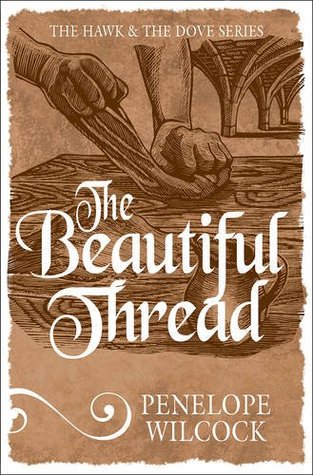
The Beautiful Thread (Hawk and the Dove series #8) By Penelope Wilcock


ISBN: 9781782641452|
$14.99 - Paperback - Lion Fiction
My thoughts: I have always loved to delve into history; and whether it is the history of the shaping of a country, the history of the church, or the history of a culture, I have found it interesting. In The Beautiful Thread we visit a Catholic Monastery in the 14th Century in Yorkshire (the time of Chaucer).

Penelope Wilcock writes in her 8-book series, The Hawk & the Dove, about monastic life in what is now England. She writes about the flawed men living lives set apart from the World in a monastery. Their lives filled with scheduled times for rising and going to bed. For periods of complete silence. Of work assigned and hopefully, joyfully done. Of designated times for prayer and study.

But they are flawed and many don't fit the mold. But still they try and they are guided by the monastery's leader, the Abbot John.

The author writes beautifully and descriptively placing the reader alongside the characters as they walk, talk, act, pray, and even fuss and fight a bit. They are, after all, flawed humans. But they are all seeking to live lives set apart for Christ their Savior.

The two main characters of The Beautiful Thread are William  de Bulmer who was once Abbot of the monastery but who left his life in the church to marry a wife. In the eyes of the church, he is an apostate and a doomed man  because this was the period in history when the church prevailed and church law condemed anyone such as William to death and suffering the worst of fates. The other main character is Abbot John who is a actually brother-in-law to William.

There is a lot of contemplative thought by the characters and soul-searching conversations in this book. At times the reading is slow primarily because this is a book more of thought than fast action.

This is a lovely book about finding The Beautiful Thread which is the love of Christ and showing love and kindness to each other. Readers come away from reading this with a feeling of having done a good thing to read it.

About the book: Abbot John has to face the consequences of his previous good deeds—and none go unpunished

In this eighth novel of the Hawk and the Dove series, William, has returned to St. Alcuins at Abbot John's request to help his replacement learn the ropes. But William's return coincides with a bishop's visitation, a regular event.

The bishop, a zealous churchman with a large entourage, has heard rumors of St. Alcuins having had in their community one William de Bulmer, who is said to have attempted suicide and left the order—attempted suicide is a felony and breaking monastic vows is a grave sin. The bishop wants to know where this man is so he can be arraigned before an ecclesiastical court, and wishes to discover what happened and what part Abbot John played in those events.

As the story unfolds, the beautiful thread of the gospel weaves quietly through the contrasting colors of human frailty, religious zeal, and social pretension.

DISCLOSURE: I received a complimentary copy from Kregel Books on behalf of Lion Fiction to facilitate this review. Opinions are my own. I was not compensated for this review.

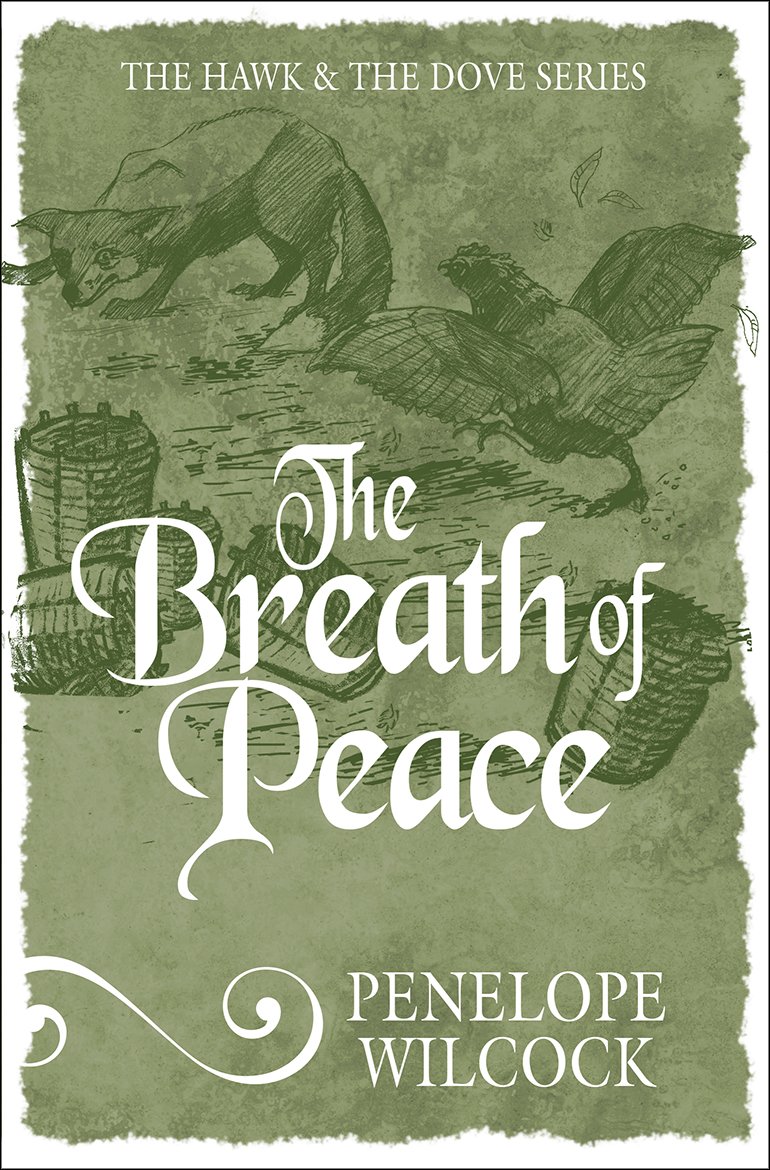
The Breath of Peace (Hawk and the Dove series #7) By Penelope Wilcock


ISBN 9781782641735
 $14.99 | Lion Fiction

About the book: William and Madeleine are deeply in love--but love may not be enough to win the day

Madeleine Hazell and William de Bulmer have been married a year. She is a healer, a wise woman, practical, intelligent, and blunt. He is not only an ex-monk, but an ex-abbot, a man accustomed to authority, a gifted administrator, at home with figures--but less capable in matters such as shutting up chickens for the night.

They are deeply, irrevocably in love. And every conversation may become a battlefield that leaves both of them wounded and resentful.

When William's former abbey, St. Alcuins, suffers the loss of their cellarer, the current Abbot Father John doesn't know how to handle the rents and provisions. He is a gifted physician and a capable leader, but estate management is beyond his competence. With a sense of rising panic he turns to his friend, the man who renounced his vows for love, the former Father William—only to find that his own pastoral skills may be required in matters matrimonial.

The Breath of Peace is the seventh novel in The Hawk and the Dove series and explores themes of mutual submission found in Ephesians 5:21–33.

My thoughts: This is a short book of around 200 pages but it is not a short read. At times it seemed as though I was sloughing through wondering if I would ever get to the end or the meat of the story.

I found Penelope Wilcock an interesting read and certainly gifted in speaking to the issue of scripturally based peace and mutual submission.

The story began - this is set during medieval times - with William and Madeleine married and eaking out a living on their homestead. Though they had an inheritance, life was hard and the loss of 4 of their 6 hens was a real issue. There was strident friction between them and I saw it mostly as caused by Madeleine. However, William has a dark side that rears its head in response.

After 30 years cloistered as a monk, William forsook his vows and wed Madeleine. Marrying late in life is hard under the best of circumstances and adjustments from a life of cloistered quiet and peace to wedded companionship certainly was difficult for William and Madeleine as well.

Being called to help the Abby set accounts right and lend guidance to selection of a new monk to care for the accounts, William went to the Abby. While there, he met with the head monk which is the Abbot and who is also the brother of Madeleine. Counsel and prayer resulted in William discovering a "breath of peace" that can and should exist in their married life.

I can recommend the book but caution that it is a somewhat slow read.

DISCLOSURE: I received a complimentary copy from Kregel Publishing to facilitate this review. Opinions are my own. I was not compensated.
Monday, September 21, 2015

Oswald: Return of the King By: Edoardo Albert [Historical fiction amid Dark-Ages Britain]

ISBN: 9781782641162
$14.99 Paperback
Lion Fiction
About the book: The second book in The Northumbrian Thrones series follows the young prince Oswald as he seeks to regain the throne taken from his family by Edwin.

The exiled family of King Æthelfrith of Northumbria arrive, after much hardship, on the island of Iona, where the monastery founded by St Columba has become a center of worship and learning. Amid the violence and turbulence of Dark-Ages Britain, the island appears a sanctuary to the hunted princes and Oswald, having become firm friends with a novice named Aidan, enters the church along with his younger brother, Oswiu.


My thoughts: I read the first book in this series, Edwin High King of Britain, and you can read my review by clicking here. In  Oswald Return of the King Edoardo Albert writes about the early shaping of Scotland, Ireland, Wales, and England. The land was peopled by clans and kingdoms constantly contending through conspiracies and war to maintain control. Families of high rank called forth loyal men to follow them into war to claim or reclaim lands previously belonging to their own kings or lords.

Oswald, eldest son of a deposed and slain king, wants to remain on the Holy Island as a monk spending his time in prayer, worship, and quiet but the Abbot of the monastery sees the need for Oswald to claim his right to be king because in doing so, Oswald will have the opportunity to bring Christianity to the pagans. So Oswald and his younger brother Oswiu leave the Holy Island and begin to rally their army to go forth and claim his kingdom. The book is subtitled Return of the King.

The entire story is moving toward the goal of Oswald and his kingdom. As it unfolds, the author's writing skill and strong knowledge of history is evident. While it is difficult to follow the roaming of the characters and to grasp their strange names, it is none-the-less a good read and pleasant. The subtle humor in spots and the turn of a phrase that brings speech authenticity to the characters makes the story enjoyable.

This was a brutish, pagan, harsh people to whom death and war were close companions. The world is termed "middle earth" by the people as it is between heaven and hell (or the lower regions).  The religious beliefs flux between whatever god the religious leader (each clan called their religious leader by a different term) claimed was favoring them at the time.

Edoardo Albert has given us another look into what life was probably like in the mid-600s AD.  The land area had been settled as far back as memory allowed and long before the Romans arrived or before Christianity arrived.  The characters in the story mention large stones from the old people who were giants (Stonehenge?) and of the large wall (Hadrian's Wall?) from the "time before."
Bamburg Castle in Northumberland, England
Of note, the cover features a stylized raven. The raven plays a major role in the story. There is a raven that is a "pet" of Oswald's. For a raven to "friend" a king, it bespeaks special powers for that king. The people are very superstitious and believe that raven's foretell what is to come.  And of course, the ever present dead on the battlefields being ravished by ravens.

A good read. There are bits of information online that the interested reader can pursue: http://www.bbc.co.uk/history/ancient/british_prehistory/iron_01.shtml http://www.ancient.eu/britain/

DISCLOSURE: I was provided a complimentary copy by Kregel to facilitate this review. Opinions are my own. I was not compensated.