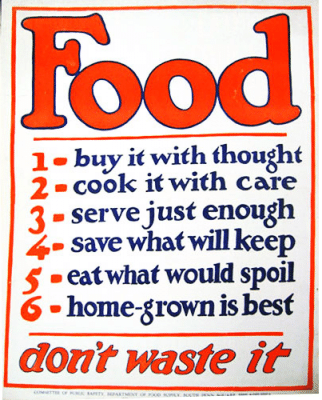
- buy it with thought - This actually means more if you think about it than if you surface skim the words. Of course, we think when we buy. But think, do you actually think? You need to think quality, because if what you purchase is flawed, past date, or low grade you just might not be getting the nutrients from the food you are buying. Buy the very BEST you have money to buy. Buy the very freshest you have access to.
- cook it with care - Now that you have brought home your treasured "thought-it-through" quality food, do take care to cook it while it is still fresh. If it sits on the counter or in the 'fridge a week, you're losing nutrients. If you just slop through the cooking process without "due care," you lose nutrients. Of course, you might lose flavor, color, texture, and appeal as well. So cook it with care.
- serve just enough - A 12" dinner plate might be pretty, but if you fill it with food, you are most likely piling on more than your body needs. Americans serve more to themselves and their families than they need to eat. They eat more than they need for good health. So research how much you and your family needs to be healthy and serve just enough.
- save what will keep - We all have wonderful refrigerators. We just need to realize what a wonder resource of frugality they are. When you cook that pot of green beans, don't toss the left overs. Place them in an airtight container and refrigerate them. They will keep. They won't keep indefinitely, but they will keep. Don't like leftovers? Get over it! Life isn't about what you like and don't like, life is about living and surviving. Some leftovers can be combined - example a vegetable medly. Some can be put into a casserole.
- eat what would spoil - Stay alert to what you have on hand and what would spoil if left uncooked and unserved another day. Eat what would spoil. Don't want THAT tonight? Get over it. Eat what would spoil. Don't leave it sitting there to spoil. Spoilage means wasted money. or Money down the drain. Or trashing your hard earned money.
- home grown is best - We don't all have garden space or the capability to grown our own food. But home grown is best. That means buy local when you can especially if you have access to a farmers market or roadside "fruit stand." If it isn't "shipped in," it probably is "vine ripened" and fresher. Fresher normally means higher nutrients.
Saturday, May 7, 2011
Food and Frugality
Saturday, March 28, 2009
Vindication of frugality
- Catching the water potatoes were cooked in during draining to use in soup, gravy, or for cooking other veggies in.
- Catching the water pasta was cooked in during draining to use in soups and gravy.
- Taking old towels and cutting them down into wash cloths and hemming the edges. Or making a smaller towel to use as a hand towel out of a bath towel.
- Remaking clothes to fit smaller bodies.
Now I have been vindicated! I was reading "Nature's Place," a free magazine distributed at Food Lion grocery stores. There is a mini article that I will quote below:
savings, al dente
Has a large pot of pasta water ever seemed too heavy to hoist? Don't laugh - mericans cook around a billion pounds of pasta a year, and besides muscle, we use lots of energy and water to do it.So here's some welcome info: you can cook pasta in about half the water called for. Save energy and water (and your strength) by using three to four quarts for a pound of pasta. Gradually add it to boiling water, stir until water returns to a boil, and cook to your liking, stirring occasionally. Besides tasty noodles, you'll end up with thick pasta water you can add to sauce. Even better, use whole-wheat pasta; it's nutritious and results in flavorful water for sauces and pestos. (Selected Sources. "How Much Water Does Pasta Really Need?" by Harold McGee, New York Times. 2/25/09, "How to Cook Pasta," www.savvyvegetarian.)
Now the funny thing about this whole article is simply that I always felt that the amount of water called for in the directions to boil your pasta was too much, so I have NEVER used as much. Yes, my water was kinda thick, but that was so much better for my later uses of it.
So get cracking, folks, and save your strength using less water and save your pasta-water to use later. You'll be glad you did. You'll be being frugal - by not wasting ANYTHING - and you'll get every smidgen of good out your food products.
Rethink what you are throwing away! Save the water any veggie is cooked in. You can use it in soups, sauces, etc. You'll be glad you did.
And while you're thinking pasta, you might want to look at The National Pasta Association website.